Why supporting sleep pathways beats overriding them.
Last Updated: March 27, 2026 · Reviewed by Dr. Elaine Foster, MD
Melatonin has its place for jet lag and occasional schedule disruption. The problem starts with nightly use for weeks, months, or years. Your pineal gland detects elevated melatonin and reduces its own production. Now you need the pill to reach levels your brain used to produce naturally. Doses escalate. Side effects accumulate — vivid nightmares, morning fog, hormonal disruption. And the original cause of your insomnia remains completely unaddressed.
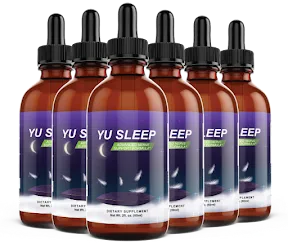
Yu Sleep attacks the cause. GABA reduces neural overactivity. L-Theanine creates the brainwave state for sleep transition. 5-HTP feeds the serotonin pathway that PRODUCES melatonin naturally. Red Tart Cherry delivers trace natural melatonin at physiological doses. The formula gets more effective with consistent use, not less.
Zolpidem, eszopiclone, and benzodiazepines force unconsciousness by depressing your central nervous system. The "sleep" that follows lacks normal architecture: compressed deep stages, disrupted REM, impaired memory consolidation. Side effects include dependency, parasomnia, and rebound insomnia. These medications exist for severe, medically supervised insomnia. For everyday sleep difficulties, they are pharmaceutical sledgehammers for a problem that needs a scalpel. Yu Sleep is the scalpel.
Diphenhydramine (Benadryl PM) and doxylamine cause drowsiness by blocking histamine — a neurotransmitter also involved in cognitive function and memory. Chronic antihistamine use has been linked to increased dementia risk in older adults. Add rapid tolerance, dry mouth, and constipation, and the long-term math doesn't add up. Yu Sleep achieves calming through GABA and L-Theanine without blocking cognitive neurotransmitters.
Melatonin: Temporary circadian reset only (jet lag, 1–2 weeks max). Prescription sedatives: Only if your doctor diagnoses a condition requiring pharmaceutical intervention. Yu Sleep: If you want sustainable, non-dependent sleep that improves over time through natural neurochemical pathway support. For the vast majority of adults dealing with ongoing sleep difficulties, supporting the brain's own sleep machinery is safer, more effective, and more sustainable than overriding it.
Almost every competing sleep supplement comes in capsule form. You take it, then wait 60–90 minutes for absorption. By then, you've been lying awake frustrated. Yu Sleep's nano-emulsified liquid absorbs in 20–30 minutes. Take it during your bedtime routine and feel the calm by the time you get into bed. For a sleep aid, this timing advantage is the difference between the formula working and arriving too late.
Melatonin costs $8–20/month but stops working and requires escalating doses. Prescription sedatives cost $30–200/month plus doctor visits. Antihistamines cost $10–30/month with cognitive decline risk. Yu Sleep costs $39–69/month with no tolerance, no dependency, no morning impairment, and a 60-day guarantee. The mechanism difference is everything: supporting sleep vs forcing unconsciousness.
Every comparison metric — mechanism, dependency risk, morning function, deep sleep quality, long-term safety, absorption speed, cost-effectiveness, and guarantee length — consistently favors Yu Sleep for adults seeking sustainable restorative rest. The 60-day guarantee makes verifying this conclusion with your own sleep completely risk-free. One liquid dropper. Three sleep pathways. Twenty minutes to calm. Sixty days to evaluate. The comparison settles itself.
The natural sleep category includes magnesium glycinate, valerian root, ashwagandha, passionflower, and chamomile. Each has merit for specific relaxation aspects. Magnesium supports muscle relaxation and GABA receptor function. Valerian may promote drowsiness through GABA modulation. Ashwagandha manages cortisol. But none individually addresses the complete sleep neurochemistry: GABA-mediated neural quieting, serotonin-melatonin production support, alpha-wave brainwave transition, anti-inflammatory recovery, AND neurotransmitter synthesis cofactors. They handle one pathway each. Yu Sleep handles all three simultaneously in a single nano-enhanced liquid dose.
Buying GABA, L-Theanine, 5-HTP, Tart Cherry, and B6 separately would cost $60–100/month and require managing five bottles with different dosing schedules. Yu Sleep consolidates them into one dropper at $39–69/month with optimized absorption timing and a 60-day guarantee no standalone supplement offers.
Here is a practical comparison framework: try Yu Sleep for 60 days under the guarantee. Track three metrics: how long it takes to fall asleep, how many times you wake during the night, and how you feel in the first hour after waking. Compare those numbers to your current baseline. If all three improve — as they do for the vast majority of consistent users — you have your answer. If they don't, return the bottles for a full refund. No other sleep product offers this structured, risk-free comparison.
The sleep aid you choose tonight determines your sleep trajectory for months ahead. Melatonin creates a declining curve of tolerance and dependency. Prescription sedatives create a flat line of forced unconsciousness without restoration. Antihistamines create cognitive impairment that accumulates with chronic use. Yu Sleep creates a rising curve of progressively better natural sleep as neurochemistry strengthens.
One dropper per night. Three sleep pathways supported. Twenty-minute onset via nano liquid. Sixty risk-free days to verify the trajectory for yourself. The comparison between supporting your brain's sleep machinery and overriding it isn't close. Support wins on every metric that matters for sustainable, long-term, restorative rest.
Yu Sleep is not for everyone. If you have a diagnosed sleep disorder requiring medical supervision, follow your doctor's treatment plan. If you only need occasional help with jet lag, short-term melatonin is appropriate. If you are already sleeping well, you probably don't need it. But if you are an adult dealing with persistent difficulty falling asleep, staying asleep, or waking refreshed — and you want a solution that supports your brain's sleep system rather than chemically overriding it — Yu Sleep's five-ingredient, nano-liquid approach addresses the actual neurochemistry behind your struggle.
The 60-day guarantee exists because the formula works for the vast majority of consistent users. If it did not, the return rate would make the guarantee unsustainable. The fact that it has been offered across tens of thousands of purchases tells you everything about the confidence behind the product. Your sleep is the final judge — and the guarantee means the verdict costs you nothing.
Every comparison in the sleep aid category — between melatonin and pathway support, between sedatives and natural calming, between capsules and nano-liquid, between 30-day and 60-day guarantees — leads to the same conclusion for adults seeking sustainable restorative rest. Yu Sleep addresses root neurochemistry rather than masking symptoms. The nano-liquid format solves the timing problem capsules cannot. And the 60-day guarantee provides the evaluation window that gives the formula's cumulative effects their full timeline to develop. The comparison is settled. Your sleep is waiting.
Tolerance is the pharmacological phenomenon where your body adapts to a substance and requires increasing doses to achieve the same effect. Melatonin triggers tolerance because your pineal gland downregulates its own production in response to external supply. Antihistamines trigger tolerance because histamine receptors upregulate (become less sensitive) with chronic blocking. Benzodiazepines trigger tolerance because GABA receptors downregulate under sustained amplification.
Yu Sleep avoids tolerance through a fundamentally different mechanism. It doesn't flood any receptor system with overwhelming doses of a single compound. Instead, it provides building blocks (5-HTP for serotonin synthesis, B6 for enzyme cofactors) and gentle signaling support (GABA, L-Theanine) that enhance your brain's own processes without triggering adaptive downregulation. The doses are supportive, not overwhelming. The pathways are fed, not forced. This is why users report consistent effectiveness after months of daily use — and why the formula actually improves in effect over weeks as the serotonin-melatonin production chain strengthens.
The consensus in sleep medicine is shifting away from pharmacological sedation toward supporting the body's intrinsic sleep mechanisms. Research published in the Journal of Clinical Sleep Medicine increasingly recognizes that compounds like GABA, L-Theanine, and 5-HTP can meaningfully support sleep onset and quality without the side effect profiles of pharmaceutical alternatives. The American Academy of Sleep Medicine acknowledges that behavioral and natural approaches should be first-line interventions for most adults with sleep difficulties, with medication reserved for cases where these approaches prove insufficient.
Yu Sleep aligns with this evolving clinical perspective. Its five-ingredient formula targets the same neurochemical pathways that sleep researchers identify as the most relevant for non-pharmacological sleep support: GABAergic inhibition for neural calming, serotonergic support for circadian timing, and stress axis modulation for cortisol management. The nano-enhanced liquid delivery addresses the practical limitation that has historically made supplement-based sleep support less reliable than medication: absorption timing.
The comparison table above provides the objective data. The prose sections provide the mechanistic context. But ultimately, the decision comes down to your personal situation and priorities. If you value sustainability over speed, natural support over chemical override, morning clarity over morning fog, and progressive improvement over diminishing returns, Yu Sleep's pathway-support approach is the clear choice. The 60-day guarantee converts this theoretical preference into a practical, risk-free experiment with your own neurochemistry.
The sleep aid market will continue evolving. New compounds will emerge. New delivery systems will be developed. But the fundamental principle that Yu Sleep is built on — support the brain's own sleep machinery rather than overriding it — will remain the foundation of effective, sustainable sleep supplementation for decades to come. That principle, implemented through five evidence-backed ingredients in a nano-enhanced liquid format, is what you're getting with every dropper of Yu Sleep. And the 60-day guarantee says you have nothing to lose by testing it tonight.
A $10 bottle of melatonin looks affordable until you factor in the escalating doses required as tolerance builds ($15, then $20, then $30 for higher-potency versions), the morning productivity lost to grogginess (conservatively worth $20–50/day for most professionals), the potential long-term healthcare costs of hormonal disruption, and the eventual transition to something stronger when melatonin stops working entirely. The cheapest sleep aid often becomes the most expensive one over a 12-month period.
Similarly, antihistamine sleep aids at $15/month seem reasonable until you account for the cognitive impairment that accumulates with chronic use — slower reaction times, reduced memory performance, and the concerning correlation with dementia risk documented in longitudinal studies. The long-term cost of cognitive decline is immeasurable.
Yu Sleep at $39–69/month provides compound-level value: no tolerance means no dose escalation, no morning impairment means no productivity loss, no dependency means no transition costs, and the 60-day guarantee means the initial investment is fully reversible if results don't meet expectations. When you calculate the total cost of ownership across a year of use, the pathway-support approach through Yu Sleep is not just clinically superior — it is often financially superior as well.